Plan Your Journey

info@amazinggallery.co.tz

WhatsApp: +255 748 691 331

Kilimanjaro National Park, Tanzania

Mount
Kilimanjaro

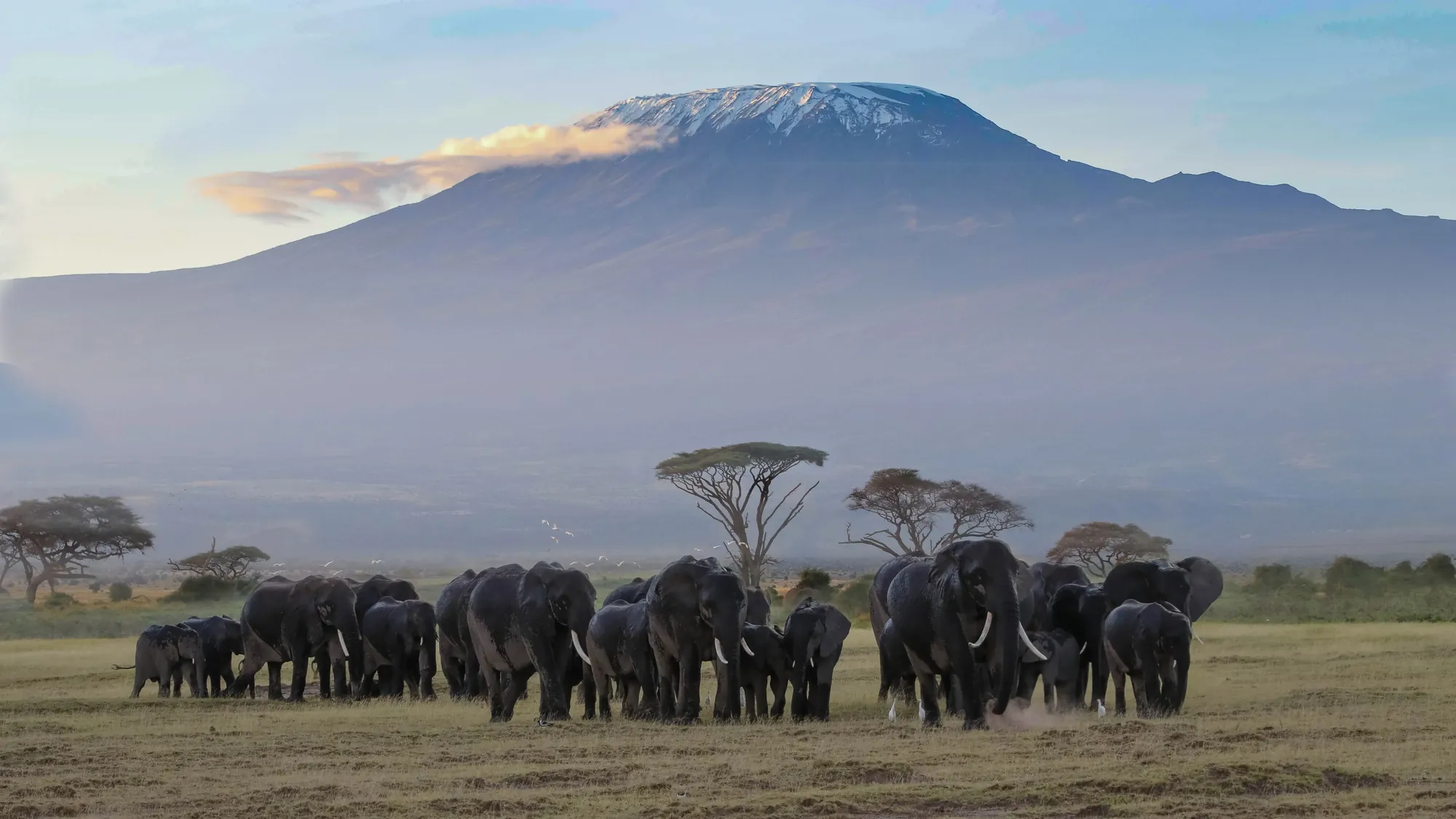
Africa's highest peak at 5,895 metres. Five climate zones from equatorial rainforest to arctic glacier. A mountain that can be climbed by any physically fit person with the right preparation, the right route, and enough days to acclimatise properly.

5,895 m Uhuru Peak UNESCO World Heritage Site Moshi Gateway
Summit5,895 mUhuru Peak, Kibo crater rim
UNESCO1987World Heritage designation
Routes5Machame, Lemosho, Marangu, Rongai, N. Circuit
Duration6–9 daysDepending on route and acclimatisation
From Moshi45 minTo the park gates by road
The Mountain

What Kilimanjaro Actually Feels Like

Kilimanjaro is not a technical climb. It requires no ropes, no crampons, no mountaineering experience. What it requires is time, patience, and the ability to walk slowly for more days than feels comfortable. Pacing, acclimatisation days, and hydration discipline determine the outcome more than fitness does. Most summit failures happen not from lack of fitness but from too few days and too rapid an ascent.

"The mountain does not negotiate. The pace it sets is the only pace that works."

Barafu Camp, 4,673 m, Midnight
The trail leaves camp at midnight. At Barafu the temperature is below -10C and the wind comes from the west. Headlamps move above you in a slow line. Below, 4,000 metres down, the lights of Moshi are visible in the darkness. Your breath comes in short bursts. You are not walking quickly. Nobody is walking quickly. The guide sets a pace that feels almost impossibly slow, and after two hours you understand exactly why. Pole pole. Slowly slowly. This is Kilimanjaro. The summit is not the reward for moving fast. It is the reward for moving at exactly the pace the mountain allows.

The five climate zones you pass through on the ascent are genuinely distinct ecosystems. The rainforest at the base is dense, wet, and full of sound. The moorland above it is open and otherworldly. The alpine desert is silent and geological. The summit zone is arctic. Moving through all five in a single journey, from equatorial forest to glacier, is an experience that is difficult to compare to anything else in East Africa, or anywhere.

The Five Zones

Kilimanjaro's Altitude Zones

The mountain passes through five distinct ecosystems as altitude increases. Each zone has its own character, its own wildlife, and its own effect on the body. Understanding what lies ahead helps climbers prepare mentally for what the mountain asks of them.

900 – 2,700 m
Rainforest Zone
Dense montane forest with colobus monkeys, sunbirds, and hundreds of plant species. Wet, green, and full of sound. Most climbers pass through on day one. It deserves more attention than it typically gets.
Machame Route →
2,700 – 4,000 m
Heath and Moorland
The forest thins and then ends. Giant heather trees, lobelia, and senecio groundsel dominate. The landscape becomes open and the mountain becomes visible for the first time. Most climbers experience their first altitude effects here.
Lemosho Route →
4,000 – 4,700 m
Alpine Desert
Volcanic rock and thin air. Almost no vegetation. The landscape is geological rather than biological. Mawenzi, the older and more eroded of Kilimanjaro's peaks, dominates the east. The summit cone of Kibo becomes the entire visual world ahead.
Rongai Route →
4,600 – 5,200 m
High Camps
Barafu on Machame. Kosovo on Lemosho. Kibo Huts on Marangu. The final camp before the summit push. Cold, exposed, and genuinely high altitude. Most climbers rest in the afternoon and depart again at midnight. The stars at this altitude are extraordinary.
Northern Circuit →
5,200 – 5,895 m
Summit Zone
The crater rim. The Furtwangler Glacier. Uhuru Peak. The highest point in Africa. The glaciers are receding and are expected to disappear within decades. Dawn from the summit is one of the most striking things this mountain offers.
Plan Your Climb →
Timing Your Visit

Best Time to Climb Kilimanjaro

Two main dry seasons define the best climbing windows. January through March is excellent and quieter than peak season. June through October is the most reliable and most popular period.

Jan
Dry Clear
Feb
Dry Clear
Mar
Good
Apr
Long Rains
May
Long Rains
Jun
Dry
Jul
Peak Dry
Aug
Peak Dry
Sep
Peak Dry
Oct
Good
Nov
Short Rains
Dec
Good
PeakBest conditions for this experience
GoodStrong experience, fewer visitors
FairPossible but variable conditions
Peak dry season
June through October
The most reliable window. Clearest views, driest trails. July and August are the busiest. Book guides and accommodation 3 to 6 months ahead for this period.
January to March
January and February
The second dry season. Excellent conditions on the upper mountain with clear summit views and less crowding. Often overlooked, which means fewer climbers on the route. Our preferred window for certain routes.
Avoid
April and May
The long rains fall heavily on the lower and mid-mountain. Trails become difficult and visibility is poor. We do not run climbs during this period.
On the Mountain

What the Climb Actually Feels Like

The climb unfolds across several days and several ecosystems. Each stage has a distinct character. The progression from forest to glacier is unlike anything else in East Africa.

Day 1
The Gate and the Forest
Registration at the gate, then the first forest steps. Cool, damp, and full of sound. Colobus monkeys visible. The altitude gain is modest. The body is adjusting without fully knowing it yet.
Day 2 – 3
The Moorland Opens
Above the treeline the landscape changes completely. Giant lobelia and senecio groundsel dominate. The mountain becomes visible for the first time. The pace slows. By day three most climbers are feeling the altitude.
Day 3 – 4
High Altitude Adjustment
The acclimatisation phase. A higher camp during the day and a descent to sleep lower. The body is building red blood cells. Headaches are common. Rest, hydration, and walking slowly are the entire job.
Day 4 – 5
The Alpine Desert
Above 4,000 metres the vegetation nearly disappears. Volcanic rock and thin air. The summit cone of Kibo becomes the entire visual world ahead. Most climbers are quiet at this stage.
Midnight
Summit Night
Departure between midnight and 1am. Headlamps only. Cold beyond what most climbers have experienced before. The Milky Way directly above. The guide sets the pace: impossibly slow, non-negotiable. Pole pole.
Dawn
Uhuru Peak
The crater rim at Stella Point, then the final push to Uhuru Peak at 5,895 m. The sun rises over the cloud layer below. Glacier ice on both sides. The sign, the photograph. The descent begins immediately.
Accommodation Planning

Where to Stay Around Kilimanjaro

Moshi is the primary base for all climbs. Pre-climb sleep and hydration matter more than most climbers expect.

Moshi Town
Pre-Climb Base
45 minutes from most gates. A wide range of lodges. Gear checks, briefings, and the equipment stores are all here. One or two nights before the climb is standard.
Best for: Pre-climb preparation. Gear and guide briefings.
At the Mountain
Forest Edge Lodges
Several lodges sit at 1,400 to 1,800 metres. Sleeping here the night before gives a slight altitude head start and a stronger sense of the mountain before you start.
Best for: Photographers. Those wanting the mountain atmosphere before day one.
Post-Climb
Recovery Nights
After descent most climbers need 12 to 16 hours of sleep. A quality Moshi lodge before moving to Zanzibar or safari. We factor this into every combined itinerary.
Best for: Recovery. Kilimanjaro and Zanzibar or safari combinations.

Pre-climb and post-climb accommodation is part of our standard planning. We do not separate the lodge from the climb. Plan your full Kilimanjaro journey with us.

Trip Planning

How Many Days to Climb Kilimanjaro

This is the single most important planning decision. More days significantly increases summit success rates. The mountain cannot be rushed.

6 nights
Minimum
Possible but limited
Six days is the minimum for most routes. Summit success rates are lower than 7-day options because acclimatisation time is reduced. We offer 6-day climbs but always recommend 7 days when the schedule allows.
Best for: Travelers with tight schedules. Experienced high-altitude hikers.
8+ nights
Best Success Rates
For the best experience and highest rates
Eight or more days (Lemosho 8-day, Northern Circuit 9-day) gives the highest summit success rates and the most complete experience of the mountain. The Northern Circuit circumnavigates the entire mountain and is the most scenic route available.
Best for: Photographers. Combined Kilimanjaro and Zanzibar recovery. Second attempts.
Expert Guidance

Common Kilimanjaro Planning Mistakes

Most summit failures and negative experiences on Kilimanjaro are the result of planning decisions made before the climb began.

Route Duration
Choosing a 6-day route to reduce cost
The price difference between a 6-day and 7-day climb is relatively small. The difference in summit success rates is significant. Saving money on route days is the most common planning decision that leads to summit failure. We always recommend the 7-day option.
Packing
Under-estimating cold on the upper mountain
Summit night temperatures regularly reach -15C to -20C with wind chill. Climbers who arrive with inadequate layering systems fail not from altitude but from cold. The gear list we provide has a reason for every item.
Porter Welfare
Booking without checking porter welfare standards
The Kilimanjaro Porters Assistance Project sets standards for porter wages, equipment, food, and load weight. We are KPAP-certified partners. Booking through an unverified operator affects every person who carries your bags up the mountain.
Preparation
Arriving without any altitude pre-conditioning
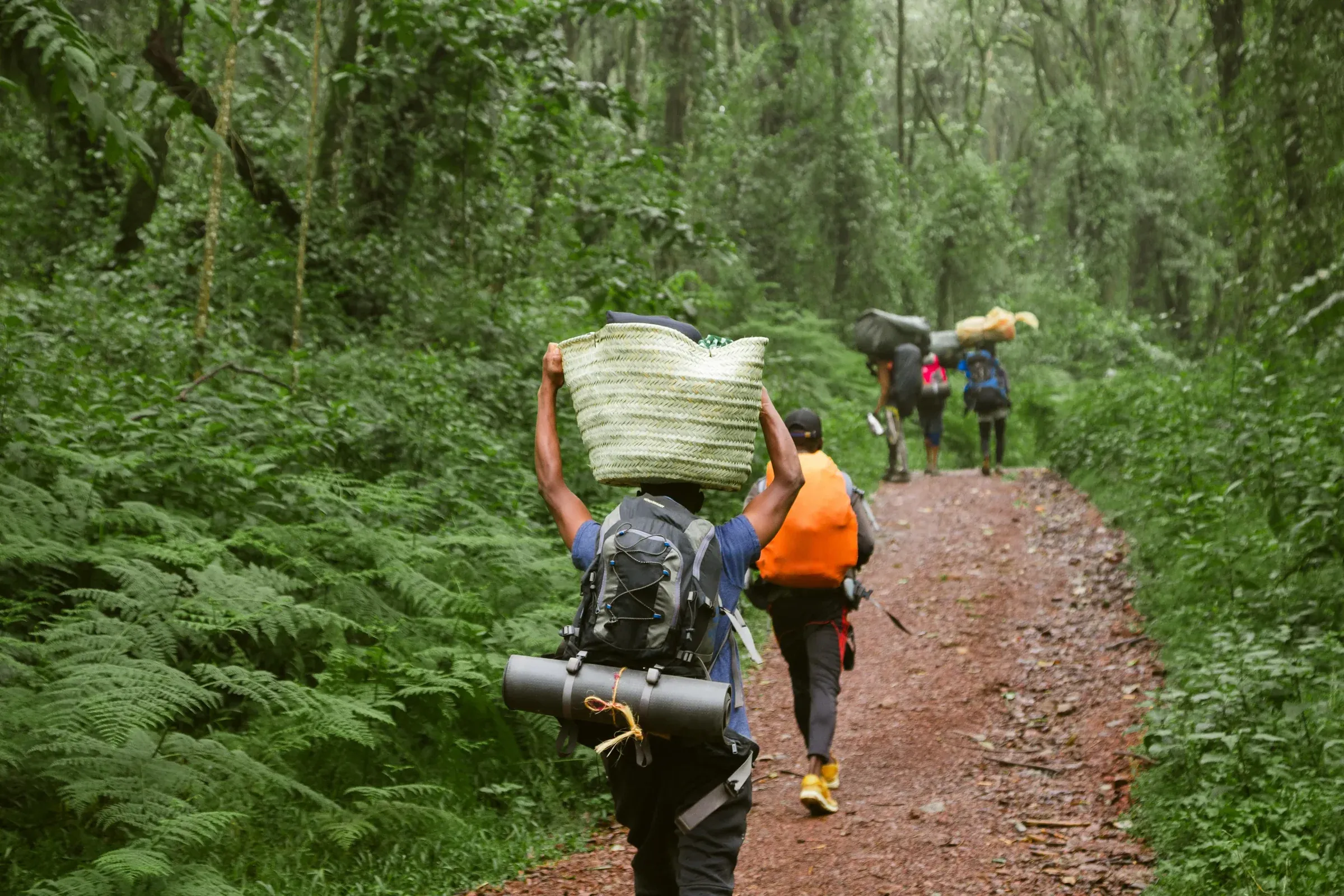
No training simulates altitude. However, arriving two to three days before the climb and spending a night in Arusha or Moshi before departure gives the body time to begin adjusting to altitude before the trek starts. Climbers who fly from sea-level and start the same day consistently report harder first days.
Responsible Travel

Climbing Responsibly on Kilimanjaro

Porter welfare. We are a KPAP-certified operator. Every porter on our climbs receives fair wages, appropriate clothing, correct load weights, and access to a formal dispute process. Porter welfare is not an optional upgrade: it is the standard we hold ourselves to on every climb.

Leave No Trace. Kilimanjaro National Park has strict regulations about waste and off-trail movement. Everything carried up is carried down. Our guides enforce this without exception. The condition of the mountain for the next generation of climbers depends on how the current generation treats it.
🌊
Optional Half-Day Add-On
Chemka Hot Springs

Natural freshwater pools fed by underground springs, set in shaded forest near Moshi. A popular recovery option for climbers on the Moshi rest day, with warm water, quiet surroundings, and very little effort required. Can be arranged during the rest day at no change to the itinerary structure or pricing.

About Chemka Hot Springs →
Plan Your Journey

Start Planning Your Kilimanjaro Climb

Tell us your preferred dates, how many days you have, and whether you want to combine the climb with safari or Zanzibar. We build the full journey from Moshi.

Plan Your Kilimanjaro Climb Contact Us
WhatsApp Us
WhatsApp Us