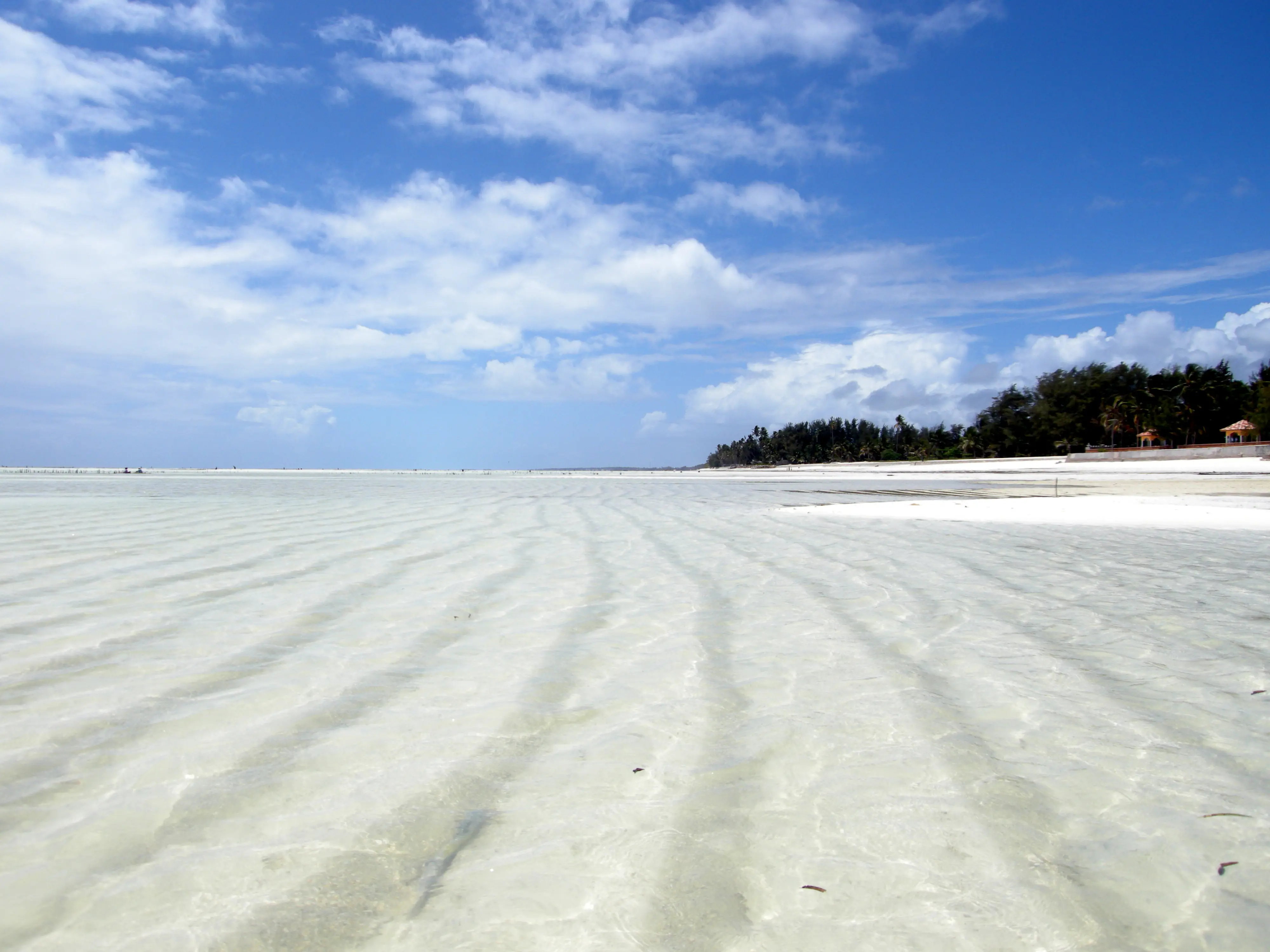
A long tidal beach, steady wind for most of the year, and a village that still functions as a village. Paje suits travellers who want to be near the water and near other people, more than those looking for a private stretch of sand.
Paje sits on Zanzibar's east coast, roughly 45 minutes from Stone Town by road. Unlike the resort strips on the north coast, the village here still functions day to day: guesthouses and kite schools sit alongside local shops and homes, not apart from them. The tide is the thing that defines a day at the beach more than anything else. At low tide the reef flat is exposed and the water retreats hundreds of metres out; at high tide it comes right up to the beach bars. Plan a swim around the tide table, not the clock.
Explore Zanzibar →Paje is one of the more consistent kitesurfing spots on the island, with reliable wind for a large part of the year, which is why several kite schools operate along this stretch. You do not need to kitesurf to enjoy Paje, but it explains the crowd here: more active, more sociable, and generally younger than the beach further north. If you want a quiet private beach with nobody else on it, Nungwi or Kendwa will suit you better. If you like a beach with some life to it, restaurants a short walk apart, and something to watch on the water, Paje works well.
December to February and June to September bring the strongest, most consistent kite wind, which is peak season for the schools along this beach and the busiest time in the village. If you are not kiting and would rather have calmer water for swimming, the shoulder months either side of the long rains (October, and again in late March before the rains set in) are quieter with lighter wind. April and May are the wettest months, with fewer visitors and lower rates.
Properties directly in the village put you within walking distance of the kite schools, restaurants, and beach bars, at the cost of more foot traffic past your room. Lodges a short walk north or south of the centre trade some of that convenience for a quieter stretch of sand. Neither is better outright: it depends whether you want Paje's social side close at hand or just visible from a distance. We match the property to what you have told us you want from the stay, not a single default recommendation.
Getting to Paje from the mainland means a domestic flight into Zanzibar followed by a road transfer to the east coast, which we arrange as part of your itinerary. After early game-drive starts or the physical demands of a climb, the change is less about the scenery and more about the schedule: no wake-up calls, no packing the vehicle, days that start whenever you get up. How many nights make sense here depends on the rest of your itinerary, and we plan that with you rather than defaulting to a fixed number.
Nungwi, on the northern tip, has the calmest swimming water on the island because it sits outside the main tidal range, along with the most nightlife and the most built-up shoreline. Kendwa, just along the coast from Nungwi, keeps a similar swimmable-at-any-tide advantage with a quieter, less commercial stretch of sand. Jambiani, Paje's southern neighbour, has the same east-coast tides but a more residential, slower village feel with fewer restaurants and less kite traffic. Paje sits between Jambiani's quiet and Nungwi's energy: enough going on to have options in the evening, without the scale of the north-coast resorts.
Paje is one stop on a longer Zanzibar stay for most guests. Jambiani sits just along the coast, Stone Town adds history and architecture, and Mnemba brings a different kind of water entirely.
Tell us what you want from the beach part of your trip, water for swimming, kite wind, nightlife, or quiet, and we will tell you honestly whether Paje fits or another coast suits you better.